

What Should Your RFQ Include?
| 1. Product Series | Open frame / tubular / latching / electromagnet / AC laminated, or select “Not sure” and let us recommend one for you. See Product Series. |
|---|---|
| 2. Electrical Specifications | Operating voltage (AC or DC), available power, duty cycle (ratio of energization ON time to de-energization OFF time). |
| 3. Mechanical Specifications | Required stroke (mm), force at the operating stroke point, dimensional constraints (L×W×H), mounting method. |
| 4. Environmental Conditions | Ambient temperature, humidity or washdown requirements, expected mechanical lifespan. |
| 5. Commercial Requirements | Annual demand or batch quantity, target price range (if any), required delivery schedule. If the end product has compliance requirements (CE, UL, IATF, RoHS), please also specify which standard must be met—see How to Understand Solenoid Certifications for the differences among the four. |
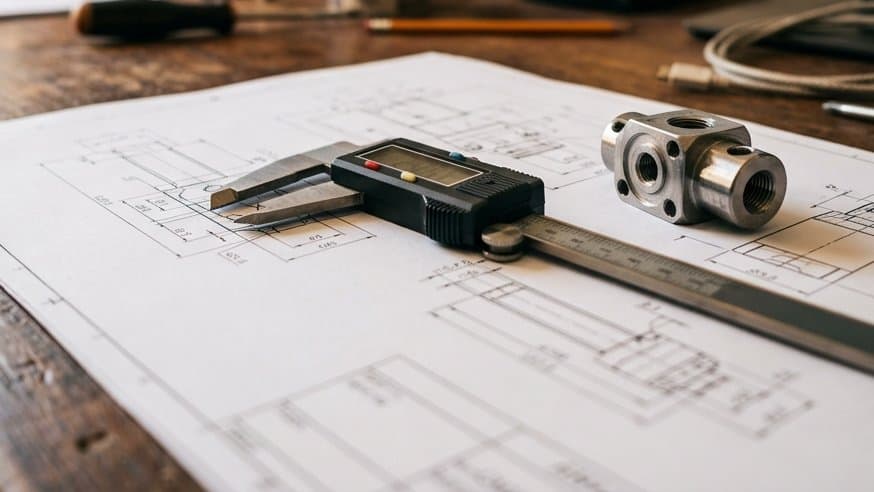
| 6. Reference Materials | Existing part numbers (ours or competitor cross-reference models) or drawings. Providing photos of existing parts is also helpful; see the Cross-Reference Guide. |
Standard Model or Custom?
If a standard model fits, we quote it directly: 44 models are documented in the part number index. If not, our engineering team proposes a custom design from your parameters; roughly half of our production is customer-specific, so a custom part is a normal path, not an exception.
If you need a custom solenoid, this checklist applies just as well—the only difference is an additional field for mounting interface dimensions. It is also completely fine if you want to get a solenoid price range before deciding whether to initiate the project, but please provide at least the stroke, force, and duty cycle; otherwise, the quoted number will be meaningless. Lead times will be specified along with the quote.
How Do You Submit an RFQ?
Direct line: Tel. 886-4-7872556 · Shih Shin Technology Co., Ltd., No. 166-1, Changsheng St., Huatan Township, Changhua County 503, Taiwan
What Happens After You Send an RFQ to Shih Shin Technology
In selection meetings during the design phase, what is most often missing is not the model number, but engineering judgment. Therefore, after receiving an RFQ, our first response is often not a quotation, but feedback such as “This model is suitable, but you need to remeasure your air gap.” We typically reply within 24 to 48 hours on business days; design proposals, prototyping, verification, and mass production only proceed after the specification review.
Frequently Asked Questions
What if I do not know the force my application needs?
Describe the mechanism instead of guessing a number. What has to move, how heavy is it, does it move against a spring or gravity, and how far. An engineer can work a usable force requirement back from that description. A guessed figure is worse than no figure, because it silently anchors the whole selection.
Which single parameter is most often missing from an RFQ?
Duty cycle. Voltage, stroke and force are almost always supplied; how long the coil stays energised versus how long it rests is almost always omitted. Duty cycle determines the thermal outcome, so a selection made without it can be correct on force and still fail in service. State it as actual on-time and rest time, not as a percentage estimate.
Should I send a drawing or a specification list?
Either works, and both together is best. A drawing settles the envelope and mounting quickly; the specification list settles the working point. If you only have one, the specification list is the more useful of the two, because a mechanism can usually be re-drawn around a correct part but a wrong part cannot be corrected by dimensions.
What if I only have a part number from another supplier?
Send it, but send working conditions alongside it. Part numbers do not transfer between manufacturers because they encode internal assumptions about duty cycle and insulation class. See the part number cross-reference for how a specification-based match is made and what information it needs.
How long does a quotation take?
Typically 24 to 48 hours on business days for a standard model. A custom requirement takes longer because it involves a design review before a figure is meaningful, and the first reply in that case sets out what has to be decided rather than quoting a number that would later change.