Targeting engineers searching for “reciprocating motion” or “push-pull action”.
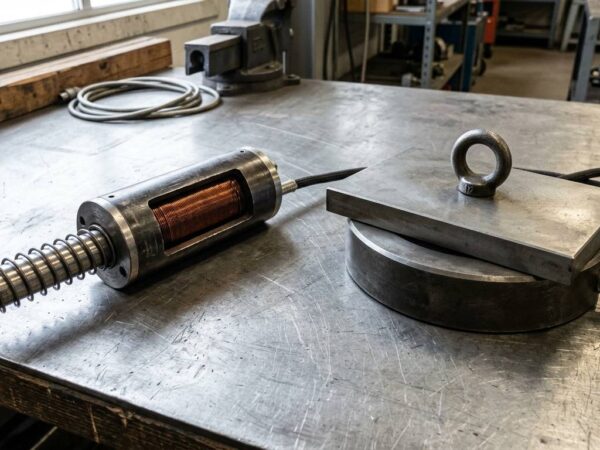
In the field of automated mechanism design, push-pull solenoids are widely used in gripper clamping, valve actuation, and discharge switching due to their extremely fast response, compact structure, and straightforward…
During the specification definition and procurement decision-making process for automation equipment and precision electromechanical projects, one of the most common hardware selection challenges faced by mechanical engineers and procurement managers…
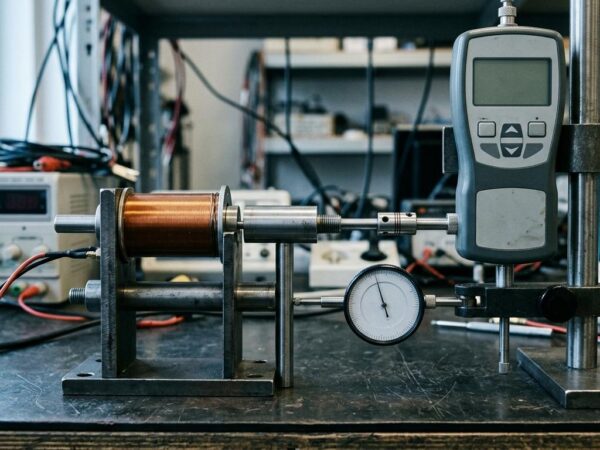
The maximum attraction force on specification sheets is often measured when the air gap is zero. This article analyzes the exponential impact of ampere-turns and air gap on magnetic force using practical electromagnet force calculation formulas, helping you select the right model with precision.
Abnormal heating and a sharp buzzing sound from an AC electromagnet are often precursors to burnout. This article thoroughly analyzes how shunt ring breakage and spool sticking lead to the inrush current continuously remaining at a high level exceeding 5 times, and provides a 5-step on-site troubleshooting SOP.
The actual attractive force of an electromagnet is often only half of its theoretical value. This article analyzes three key variables: air gap, material, and temperature rise, revealing how a 0.5mm air gap and a 120°C temperature rise affect magnetic circuit performance, and provides practical guidance for selection and evaluation.
When standard pneumatic components are limited by space and response speed, how to evaluate custom solenoid alternatives? This article analyzes how, under 24V DC voltage, to overcome physical limitations such as residual magnetism and temperature rise, and achieve millisecond-level high-efficiency driving.
When standard electromagnets operate in high temperatures or at high frequencies, temperature rise and residual magnetism often cause power output attenuation of over 40%. This article analyzes when standard products should be abandoned and customized electromagnet designs should be adopted to ensure system stability.
Up to 85% of smart lock and automatic curtain failures stem from improper electromagnet selection. This article dissects the fatal impact of lateral force and residual magnetism on smart home components, providing a bistable design solution that reduces power consumption by 40%.
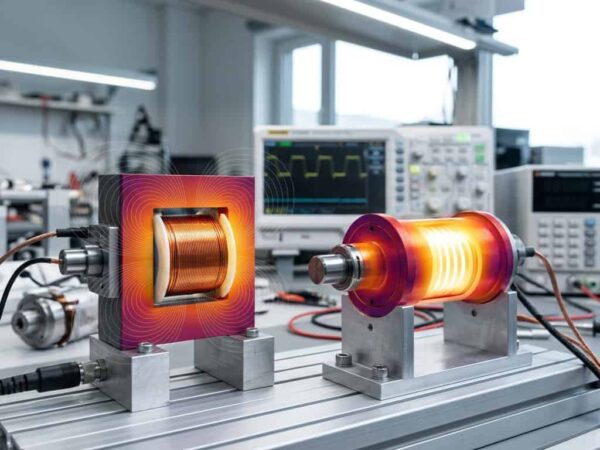
Open-frame and tubular solenoids have fundamental differences in structure and magnetic circuit. This article deeply analyzes their implicit performance in heat dissipation, magnetic circuit efficiency, and residual magnetism control, and provides a complete specification comparison table to help engineers make precise solenoid selection decisions under various operating conditions, such as 25°C.
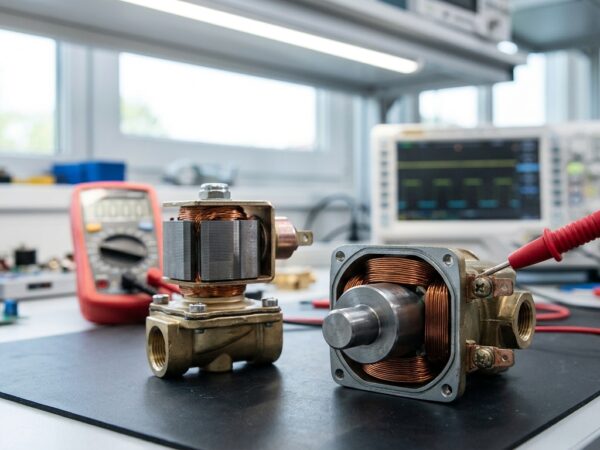
Choosing AC or DC solenoid valves is not merely a voltage concern; it also involves the risk of coil burnout and the management of residual magnetism. AC solenoid valves can experience a 3-5 fold current surge when jammed, while DC specifications must address release delays caused by residual magnetism. This article provides an in-depth selection guide for engineers and procurement professionals, assisting you in circumventing the technical pitfalls associated with high-frequency switching and environmental interference.