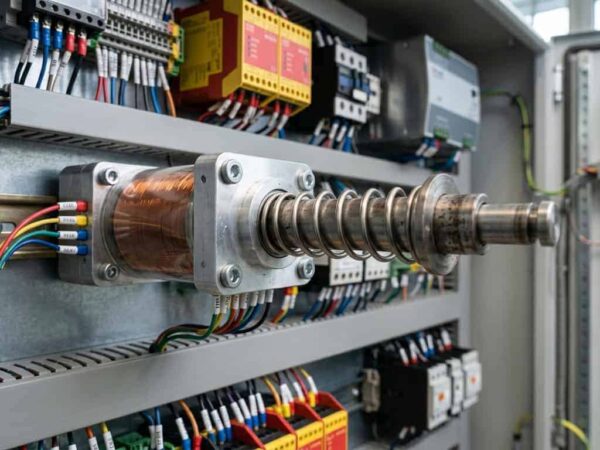
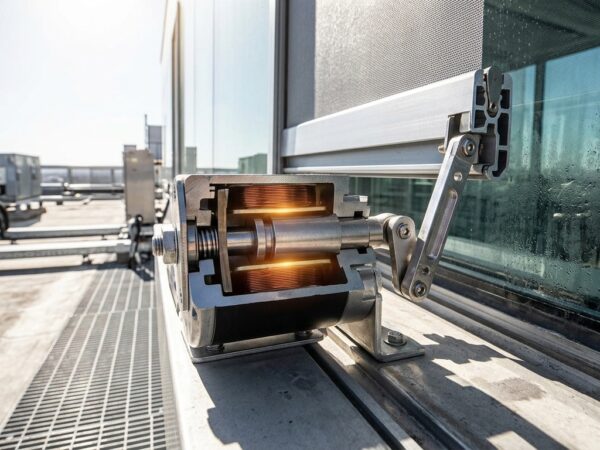
Smart locks, Automatic curtains, Home appliance actuators.

Smart Logistics and Unattended Locker Solenoid Lock Selection Guide: Vandal Resistance, Microswitch Signal Feedback, and Emergency Unlocking Mechanisms

In unattended scenarios such as smart express lockers, fresh food pickup lockers, gym lockers, and factory smart asset management cabinets, hardware systems must operate at high frequency year-round in unmanned…

Continue ReadingSmart Logistics and Unattended Locker Solenoid Lock Selection Guide: Vandal Resistance, Microswitch Signal Feedback, and Emergency Unlocking Mechanisms

Solenoid Selection for Smart Lock Brands: Understanding the Design Differences Between Door Locks and Vehicle Locks at a Glance

Comparing the design differences between solenoids for household and automotive electronic locks, automotive locks must withstand 20G shock acceleration and 180°C high temperatures, while household locks focus on low-power designs with an extremely short 0.5-second power-on time. This article deeply analyzes the essential differences between the two in terms of fit tolerance, coil temperature resistance rating, and residual magnetism control, providing brand PMs with a precise customized selection guide.

Continue ReadingSolenoid Selection for Smart Lock Brands: Understanding the Design Differences Between Door Locks and Vehicle Locks at a Glance

Smart Locks and Automatic Curtains Jamming Failures? Examining the Invisible Traps of Lateral Force and Residual Magnetism from Electromagnet Selection

Up to 85% of smart lock and automatic curtain failures stem from improper electromagnet selection. This article dissects the fatal impact of lateral force and residual magnetism on smart home components, providing a bistable design solution that reduces power consumption by 40%.

Continue ReadingSmart Locks and Automatic Curtains Jamming Failures? Examining the Invisible Traps of Lateral Force and Residual Magnetism from Electromagnet Selection

Unstable Extraction Pressure? Debunking the High-Temperature Residual Magnetism and Flow Control Myth in Coffee Machine Solenoid Valves

After disassembling several high-temperature malfunctioning coffee machines, we found that unstable extraction often stems from residual magnetism in the solenoid valve generated under high temperatures. This article deeply explores how to achieve precise flow control with an error of less than 5 milliseconds in high-temperature water circuits above 92°C, through dynamic magnetic circuits and material compensation.

Continue ReadingUnstable Extraction Pressure? Debunking the High-Temperature Residual Magnetism and Flow Control Myth in Coffee Machine Solenoid Valves

Invisible Pitfalls in Fail-Safe Design: Electromagnet Selection and Residual Magnetism Control in Emergency Power-Off Systems

In emergency power-off systems, the selection of electromagnets directly determines the success or failure of fail-safe designs. This article provides an in-depth analysis of the differences in temperature rise, residual magnetism, and lifespan between normally-energized release type and latching type electromagnets during long-term operation, offering engineers a practical dynamic decision-making framework.

Continue ReadingInvisible Pitfalls in Fail-Safe Design: Electromagnet Selection and Residual Magnetism Control in Emergency Power-Off Systems

The Secret to Fitness Equipment Resistance Control: How Electromagnet Applications Achieve a Silky Smooth Feel?

Why do some magnetic resistance flywheels feel like dragging through sand when pedaled, while others glide as smoothly as an ice skate? This article analyzes the issues of residual magnetism and thermal decay in electromagnets within fitness equipment resistance control, and provides 3 key procurement evaluation indicators.

Continue ReadingThe Secret to Fitness Equipment Resistance Control: How Electromagnet Applications Achieve a Silky Smooth Feel?

Power Cut, But Door Won’t Open? Failure Analysis of Residual Magnetism and Lateral Force in Fire Door and Smart Lock Electromagnets

Fire door and smart lock electromagnets often fail due to temperature rise and residual magnetism. This article analyzes the actual performance of holding-type and push-pull type electromagnets under high temperature and lateral force, and provides key indicators from 1-million-cycle lifespan tests.

Continue ReadingPower Cut, But Door Won’t Open? Failure Analysis of Residual Magnetism and Lateral Force in Fire Door and Smart Lock Electromagnets

Key to Home Appliance Safety and Water Circuit Control: Moisture-Proof and Durable Design of Washing Machine Solenoid Valves and Door Lock Electromagnets

Analyzing the key design points for optimizing the magnetic circuit to address the door lock, water supply, and drainage requirements of drum washing machines in high-humidity and vibration environments, focusing on residual magnetism control of electromagnets, IPX4 moisture-proof potting, and reducing water hammer noise.

Continue ReadingKey to Home Appliance Safety and Water Circuit Control: Moisture-Proof and Durable Design of Washing Machine Solenoid Valves and Door Lock Electromagnets

Full Analysis of Small Solenoid Valves: How Do Home Appliance Designs Balance Compactness and Flow Control Precision?

Unveiling the Design Logic of Small Solenoid Valves for Home Appliances: Why Can a 0.5mm Air Gap Determine a Switching Life of 500,000 Cycles? This article deeply explores residual magnetism phenomena, heat dissipation bottlenecks, and material selection, analyzing the precise flow control technology behind coffee machines and washing machines.

Continue ReadingFull Analysis of Small Solenoid Valves: How Do Home Appliance Designs Balance Compactness and Flow Control Precision?

Smart Shading and Daylighting Systems: The Durability and Residual Magnetism Design of Electromagnets in Building Automation

Smart shading systems often experience failures after three years of operation, mainly due to high-temperature environments causing a 15% decrease in electromagnet coil performance and residual magnetism accumulation. This paper analyzes the aging mechanism of electromagnets in building automation, providing selection strategies for long-lasting designs and solutions to prevent residual magnetism.

Continue ReadingSmart Shading and Daylighting Systems: The Durability and Residual Magnetism Design of Electromagnets in Building Automation