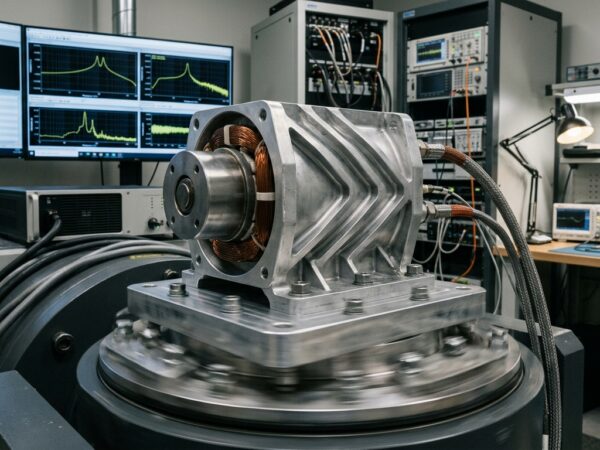
Charging pile locking, Automotive transmission solenoid valves.

Electric Vehicle (EV) Charging Gun Electronic Locking Solenoid Technical Analysis: Anti-Pull Self-Locking, IP67 Waterproofing, and Plug Endurance Testing

In electric vehicle (EV) charging infrastructure, the power output of DC Fast Chargers has exceeded 360 kW and is even climbing toward megawatt levels (Megawatt Charging System, MCS), with transmission…

Continue ReadingElectric Vehicle (EV) Charging Gun Electronic Locking Solenoid Technical Analysis: Anti-Pull Self-Locking, IP67 Waterproofing, and Plug Endurance Testing

Procurement Essentials for Automotive Linear Solenoid Valves and Actuators: Key Validation Factors for Vibration, Shock, and Wide Operating Temperature (-40°C to 125°C)

In New Energy Vehicles (NEVs), Advanced Driver Assistance Systems (ADAS), and intelligent chassis electronic control systems, Automotive Linear Solenoid Valves and electromagnetic actuators undertake critical responsibilities such as transmission hydraulic…

Continue ReadingProcurement Essentials for Automotive Linear Solenoid Valves and Actuators: Key Validation Factors for Vibration, Shock, and Wide Operating Temperature (-40°C to 125°C)

How to solve a stuck car central lock? A troubleshooting record of a customized electromagnet solution

Car central lock jamming is often caused by temperature rise and residual magnetism accumulation. This article analyzes the chain reaction between electromagnets and spring fatigue under 12V systems, and provides anti-jamming design solutions for customized electromagnets.

Continue ReadingHow to solve a stuck car central lock? A troubleshooting record of a customized electromagnet solution

Automotive Solenoid Procurement Guide: Selection Indicators and Supplier Evaluation for Central Locks, Transmissions, and Oil Pumps

Automotive-grade solenoids are highly prone to failure under high temperature and high vibration. This article analyzes the selection blind spots of automotive solenoids in scenarios such as transmissions and central locks for Tier 1 procurement, and provides an IATF 16949 supplier evaluation model.

Continue ReadingAutomotive Solenoid Procurement Guide: Selection Indicators and Supplier Evaluation for Central Locks, Transmissions, and Oil Pumps

Solenoid Selection for Smart Lock Brands: Understanding the Design Differences Between Door Locks and Vehicle Locks at a Glance

Comparing the design differences between solenoids for household and automotive electronic locks, automotive locks must withstand 20G shock acceleration and 180°C high temperatures, while household locks focus on low-power designs with an extremely short 0.5-second power-on time. This article deeply analyzes the essential differences between the two in terms of fit tolerance, coil temperature resistance rating, and residual magnetism control, providing brand PMs with a precise customized selection guide.

Continue ReadingSolenoid Selection for Smart Lock Brands: Understanding the Design Differences Between Door Locks and Vehicle Locks at a Glance

Energy efficiency is competitiveness! How do low-power electromagnets extend the battery life of mobile devices?

Explore how, through low-power electromagnets and latching magnetic circuit design, it's possible to reduce holding power consumption by 80% without sacrificing suction force, thereby significantly extending the battery life of handheld devices and mobile instruments.

Continue ReadingEnergy efficiency is competitiveness! How do low-power electromagnets extend the battery life of mobile devices?

What are the differences between solenoid valves, pneumatic cylinders, and motor actuators? An engineer’s actuator selection guide.

Compares the core differences among solenoid valves, pneumatic cylinders, and motor actuators in terms of response time, stroke, and positioning accuracy, and provides a solenoid valve selection decision model for harsh operating conditions such as high temperature and high frequency.

Continue ReadingWhat are the differences between solenoid valves, pneumatic cylinders, and motor actuators? An engineer’s actuator selection guide.

Solenoid Design in Vibration Environments: Long-term Optimization Strategies for Automotive and Defense Grades

In automotive and defense applications, high-frequency vibration accelerates mechanical wear and residual magnetism accumulation inside solenoids. This article explores the impact of 15G random vibration on magnetic circuit efficiency, notes that environments above 10G cause reset delays to increase by 12% to 18%, and proposes a design framework with a 20% attraction force margin.

Continue ReadingSolenoid Design in Vibration Environments: Long-term Optimization Strategies for Automotive and Defense Grades

Calculation of Electromagnetic Actuators in Smart Conveying Systems: How to Accurately Derive the Dynamic Requirements for Logistics Sorting

In smart logistics systems, thermal decay and residual magnetic hysteresis of electromagnetic actuators are the main causes of sorting errors. This paper, through thrust formulas and temperature rise models, analyzes how to accurately derive the dynamic performance required for logistics equipment, and proposes an engineering practice recommendation to set the thrust margin at over 30%.

Continue ReadingCalculation of Electromagnetic Actuators in Smart Conveying Systems: How to Accurately Derive the Dynamic Requirements for Logistics Sorting

When Screws Tremble at 30,000 Feet: The Survival of Aerospace and Defense-Grade Solenoid Valves

Solenoid valves for aerospace and defense applications must withstand 2000Hz high-frequency vibration and temperature differential challenges ranging from -55°C to 175°C. This article, from an FA (Failure Analysis) perspective, dissects how vibration leads to coil failure and offers engineering insights for Shore D 60-80 hardness potting compounds, helping you master key selection criteria for extreme environments.

Continue ReadingWhen Screws Tremble at 30,000 Feet: The Survival of Aerospace and Defense-Grade Solenoid Valves