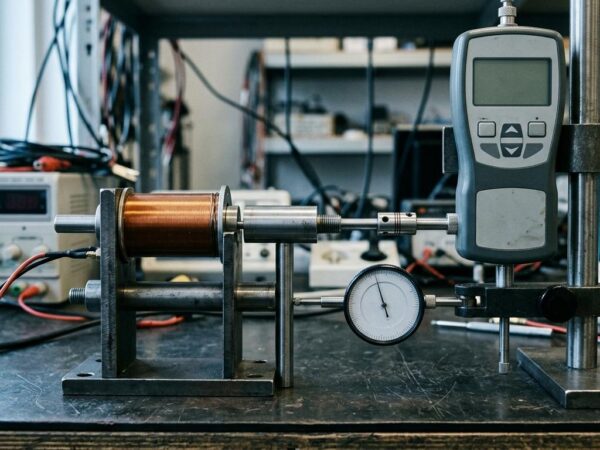
Push-Pull Solenoid Long-Stroke Design Techniques: 4 Mechanism Compensation Schemes to Overcome the Steep Force Drop at Stroke End

In the field of automated mechanism design, push-pull solenoids are widely used in gripper clamping, valve actuation, and discharge switching due to their extremely fast response, compact structure, and straightforward…

Continue ReadingPush-Pull Solenoid Long-Stroke Design Techniques: 4 Mechanism Compensation Schemes to Overcome the Steep Force Drop at Stroke End

Smart Locks and Automatic Curtains Jamming Failures? Examining the Invisible Traps of Lateral Force and Residual Magnetism from Electromagnet Selection

Up to 85% of smart lock and automatic curtain failures stem from improper electromagnet selection. This article dissects the fatal impact of lateral force and residual magnetism on smart home components, providing a bistable design solution that reduces power consumption by 40%.

Continue ReadingSmart Locks and Automatic Curtains Jamming Failures? Examining the Invisible Traps of Lateral Force and Residual Magnetism from Electromagnet Selection

Push-Pull Solenoid vs. Tubular Solenoid: How Do Structural Differences Determine Your Selection Efficiency?

An in-depth analysis of the structural differences between push-pull and tubular solenoids, exploring how magnetic leakage affects the force curve. Research shows that tubular structures provide 25% higher force stability than open-frame types when the stroke exceeds 10mm, and offer better "residual magnetism" control and a mechanical lifespan of tens of millions of cycles.

Continue ReadingPush-Pull Solenoid vs. Tubular Solenoid: How Do Structural Differences Determine Your Selection Efficiency?