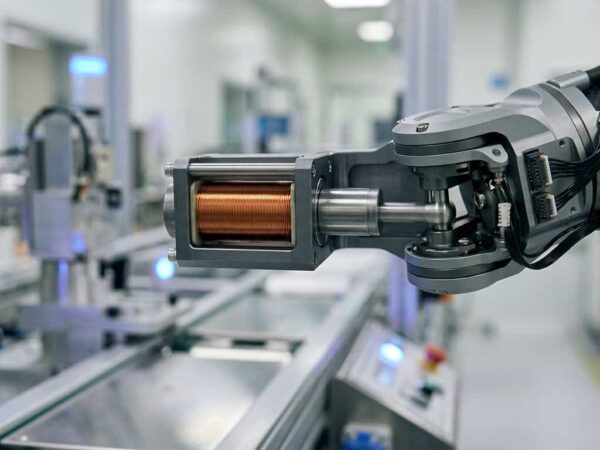
Taiwan’s Electromagnet Supply Chain Advantages: Why Asian OEM Projects Need Local Engineering Support

What appear to be simple electromagnet OEM projects often fail in later stages due to high temperature and residual magnetism accumulation. Taiwan's electromagnet supply chain, leveraging local engineering support and precision machining advantages, can complete design verification within 48 hours, significantly helping Asian OEM projects shorten development lead times and reduce mass production risks.

Continue ReadingTaiwan’s Electromagnet Supply Chain Advantages: Why Asian OEM Projects Need Local Engineering Support

Electromagnet RFQ Template: 15 Mandatory Specification Fields for Engineers and Purchasers

Offering a complete electromagnet RFQ specification template that meticulously breaks down 15 key electrical and mechanical parameters, and incorporates duty cycle formula calculations and residual magnetism considerations, to help engineers and procurement shorten prototyping lead time by 45%.

Continue ReadingElectromagnet RFQ Template: 15 Mandatory Specification Fields for Engineers and Purchasers

Causes of AC Electromagnet Buzzing and Overheating: Field Service Troubleshooting SOP

Abnormal heating and a sharp buzzing sound from an AC electromagnet are often precursors to burnout. This article thoroughly analyzes how shunt ring breakage and spool sticking lead to the inrush current continuously remaining at a high level exceeding 5 times, and provides a 5-step on-site troubleshooting SOP.

Continue ReadingCauses of AC Electromagnet Buzzing and Overheating: Field Service Troubleshooting SOP

Explosion-proof Solenoid Valve Selection Guide: Safety Specification Requirements for Chemical, Energy, and Hazardous Areas

Dive deep into the operating principles and safety specifications of explosion-proof solenoid valves. Explore the differences between flameproof and increased safety types, and provide a temperature class comparison table for selecting explosion-proof solenoid valves in chemical and energy applications, to help you accurately assess the impact of residual magnetism and coil temperature rise on the solenoid valve's lifespan.

Continue ReadingExplosion-proof Solenoid Valve Selection Guide: Safety Specification Requirements for Chemical, Energy, and Hazardous Areas

Medical-grade solenoid valve compliance list: CE, RoHS, ISO 13485 – What to look for before purchasing

When purchasing medical-grade solenoid valves, compliance certification is the safety baseline. This article, from the perspectives of physical materials and electromagnetic interference, deeply analyzes the engineering requirements of RoHS, ISO 13485, and CE certifications, and provides a dual acceptance checklist.

Continue ReadingMedical-grade solenoid valve compliance list: CE, RoHS, ISO 13485 – What to look for before purchasing

100% full inspection quality process for electromagnets: How are coil, pull force, withstand voltage, and temperature rise measured?

  • Post published:
  • Post category:Technical Hub
  • Post last modified:
  • Reading time:5 mins read

This article analyzes the four core processes for quality inspection of industrial-grade electromagnets, ensuring through 100% full inspection that coil impedance, dynamic suction force, high-voltage withstand voltage, and ultimate temperature rise all meet zero-defect standards.

Continue Reading100% full inspection quality process for electromagnets: How are coil, pull force, withstand voltage, and temperature rise measured?

Electromagnet pull force calculator failed? How do air gap, material, and temperature rise affect actual pull force?

The actual attractive force of an electromagnet is often only half of its theoretical value. This article analyzes three key variables: air gap, material, and temperature rise, revealing how a 0.5mm air gap and a 120°C temperature rise affect magnetic circuit performance, and provides practical guidance for selection and evaluation.

Continue ReadingElectromagnet pull force calculator failed? How do air gap, material, and temperature rise affect actual pull force?

How does electromagnetic circuit simulation shorten the prototyping cycle? A Development Guide from Specification Confirmation to Sample Validation

Through 3D magnetic circuit simulation and thermal-magnetic coupling analysis, engineers can accurately predict the magnetic saturation and temperature rise changes of electromagnets before prototyping, shortening the development cycle by more than 50% and avoiding the risk of residual magnetism lock-up.

Continue ReadingHow does electromagnetic circuit simulation shorten the prototyping cycle? A Development Guide from Specification Confirmation to Sample Validation

Electromagnet Procurement Cost Optimization: How to Reduce Development and Mass Production Costs with Modular Specifications

Over 90% of customized electromagnets have magnetic circuit structures with nearly 85% of their dimensions completely overlapping with standard products. This article analyzes how to reduce mass production costs by over 40% without re-tooling, through modular coil design.

Continue ReadingElectromagnet Procurement Cost Optimization: How to Reduce Development and Mass Production Costs with Modular Specifications

Not enough space for SMC, Festo pneumatic components? A Guide to Evaluating Custom Electromagnet Alternatives for High-Precision Equipment.

When standard pneumatic components are limited by space and response speed, how to evaluate custom solenoid alternatives? This article analyzes how, under 24V DC voltage, to overcome physical limitations such as residual magnetism and temperature rise, and achieve millisecond-level high-efficiency driving.

Continue ReadingNot enough space for SMC, Festo pneumatic components? A Guide to Evaluating Custom Electromagnet Alternatives for High-Precision Equipment.