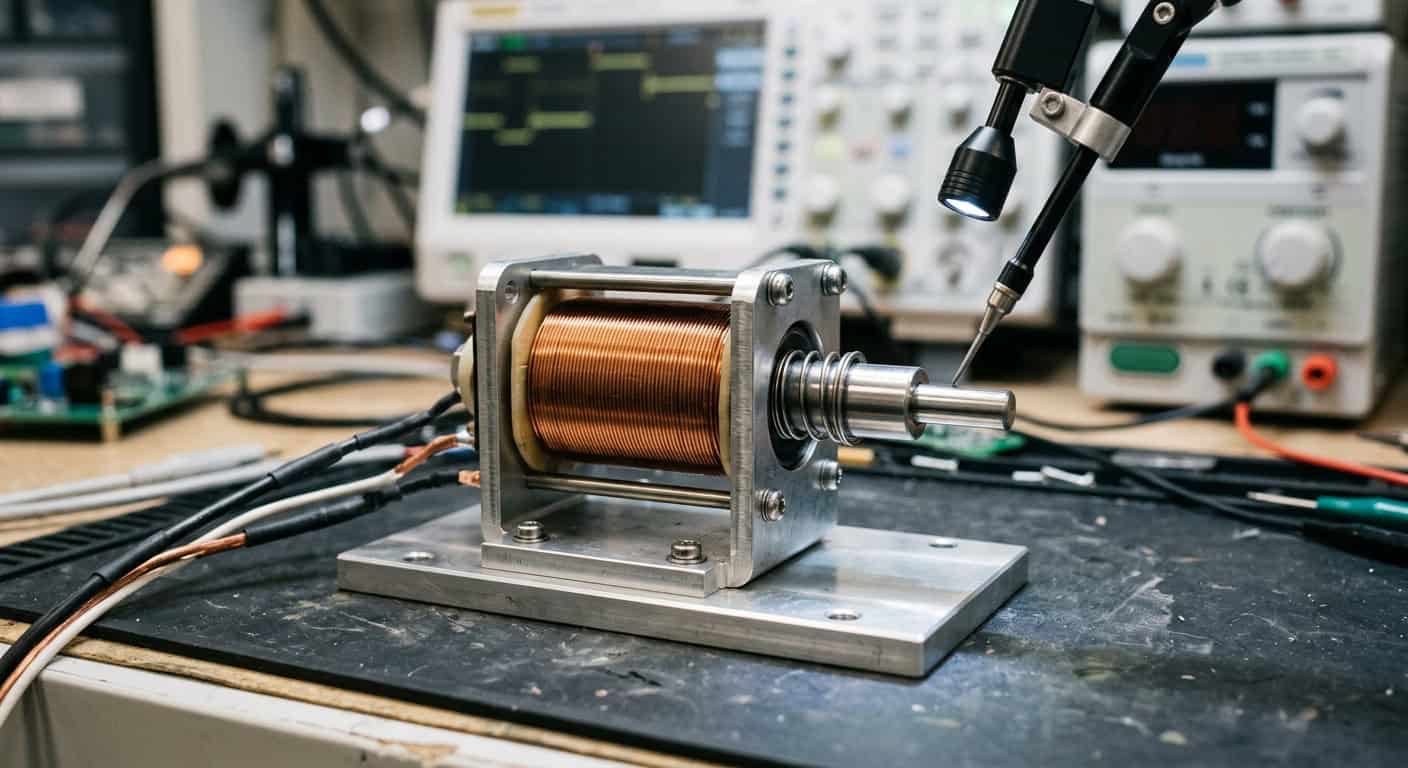
Physical Challenges of Charging Gun Locking Up and Loosening: Why Do Locking Mechanisms Fail?
In electric vehicle (EV) charging infrastructure, the stability of the Charging Gun Locking Mechanism often determines the upper limit of the user experience. Have you ever encountered the awkward situation where the charging gun gets mechanically jammed and cannot be unplugged after charging is complete? Or worse, during the charging process, the locking pin becomes loose due to vibration or overheating, leading to communication interruptions or even the risk of electric arcs. From an engineering perspective, such problems usually stem from the internal electromagnet design of the locking mechanism failing to balance ‘Thermal Drift’ and ‘mechanical tolerances’. When charging stations are exposed to direct sunlight for extended periods, ambient temperatures can rise above 60°C, and coupled with the Joule heating generated by the coil’s energization, the material expansion of internal components changes the friction torque. If the initial attraction force margin of the electromagnet is insufficient, this will cause the locking pin’s travel to be hindered.
When magnetic force weakens as temperature rises, thermal management is no longer just a heat dissipation issue, but a core indicator determining whether the locking mechanism can successfully overcome friction and complete its action under extreme conditions.
Furthermore, Residual Magnetism is another underestimated design pitfall. If the electromagnet’s magnetic circuit design does not account for demagnetization gaps, or if the selected magnetic material’s permeability decays too quickly, the locking pin may still be pulled by a weak magnetic force after power is cut, leading to a sluggish unlocking response. If this physical limitation is not rigorously simulated using a Force vs. Stroke curve during the initial design phase, it often leads to a surge in subsequent maintenance costs.
Balancing Electromagnet Stroke Curve and Attraction Force: Analyzing the Technical Specifications of Locking Mechanisms
When evaluating charging station locking electromagnets, engineers most frequently face the dilemma of: how to provide sufficient instantaneous thrust within a confined installation space, while ensuring controllable temperature rise during long-term energization. Typically, the linear electromagnets we use exhibit completely different force characteristics at the start and end of their stroke. When the locking pin begins to move, it needs to overcome the preload force of the return spring and potential foreign object resistance; while at the end of its stroke, it requires sufficient holding force to resist external pulling. This demands extremely precise settings for the electromagnet’s ‘Duty Cycle’. If input power is excessively increased to enhance attraction force, it will lead to premature Magnetic Saturation, not only wasting energy, but also causing heat to rapidly accumulate within the confined gun head space, shortening the lifespan of the Insulation Class. We have observed in the field that many failure cases are due to neglecting the thermal equilibrium state of the magnetic frame after prolonged operation. An ideal locking electromagnet should possess a steep but stable force-displacement curve, ensuring that within a voltage fluctuation range of 10%, it can still provide a starting thrust force more than double the friction force.
Environmental Adaptability Challenges: Design Trade-offs in the Face of Extreme Temperature Differences and High Humidity
EV charging stations are typically installed outdoors, which means the locking mechanism must directly face the intrusion of rainwater, salt spray, and dust. Simply relying on the IP protection of the external enclosure is insufficient; the structural design of the electromagnet itself must also possess inherent corrosion resistance. For example, the surface treatment process of the stainless steel Plunger directly affects the balance between corrosion resistance and friction coefficient. If the fit tolerance between the electromagnet and the guide sleeve is too tight, a small amount of condensed water is enough to cause oxide layer accumulation, leading to motion sticking; conversely, if the tolerance is too large, it will affect the continuity of the magnetic circuit, reducing operating efficiency. The table below shows the key considerations for engineers when selecting electromagnets under different environmental requirements:
| Technical Specification | Standard Electromagnet | High-Performance EV-Specific Electromagnet | Design Consideration Reason |
|---|---|---|---|
| Insulation Class | Class B (130°C) | Class H (180°C) | To cope with outdoor exposure and temperature rise from high current |
| Surface Treatment | Nickel Plating / Zinc Plating | Teflon Coating / Salt Spray 96h+ | Reduce long-term friction loss and corrosion |
| Residual Magnetism | Natural Demagnetization | Non-magnetic Shims / Optimized Magnetic Circuit | Ensure rapid unlocking after instantaneous power cut |
| Duty Cycle | 10% – 25% | 100% (ED 100) or Pulse Control | Adapt to long-term locking requirements |
For commercial fast charging stations used with high frequency, we usually recommend introducing a pulse-driven solution: using high voltage for activation and then switching to low voltage for maintenance. This not only reduces power consumption by over 60%, but also significantly suppresses thermal drift, ensuring the locking pin is always in its optimal physical state.
Why Do High-Load Charging Equipment Require Customized Electromagnet Designs More?
As charging power increases from 7kW to 350kW or even higher, the size and weight of charging guns are increasing, which imposes higher mechanical strength requirements on the locking mechanism. Off-the-shelf standard products often struggle to balance compact size and powerful thrust, which is precisely when customized R&D should intervene. Shih Shin Technology has been deeply involved in the field of electromagnetic components for many years, and we understand that industrial applications have extremely low tolerance for errors. In the process of collaborating with global charging station developers, we have found that subtle coil winding tension or the carbon content of magnetic materials will reflect in the failure rate of the final product. Shih Shin Technology can provide comprehensive technical consulting and production solutions based on your specific application scenarios, from force-displacement curve simulation, weather resistance testing, to material fatigue analysis. We don’t just provide components; we help you solve the ‘invisible’ physical challenges during the charging process. On the path to intelligent transportation, every small locking action is a cornerstone in building a safe network. If you are designing the next generation of high-efficiency charging stations, or encountering intractable sticking issues in existing products, we recommend re-examining the electromagnet’s fundamental magnetic parameters and thermal dynamic response, as this is often the shortcut to high-quality products.
Precise electromagnet design should incorporate thermal drift testing and stroke curve margin evaluation at the prototype stage, to ensure the locking mechanism maintains consistent operational response after 50,000 cycles.