
Key Certifications and Electrical Safety Indicators for Medical-Grade Solenoid Valves
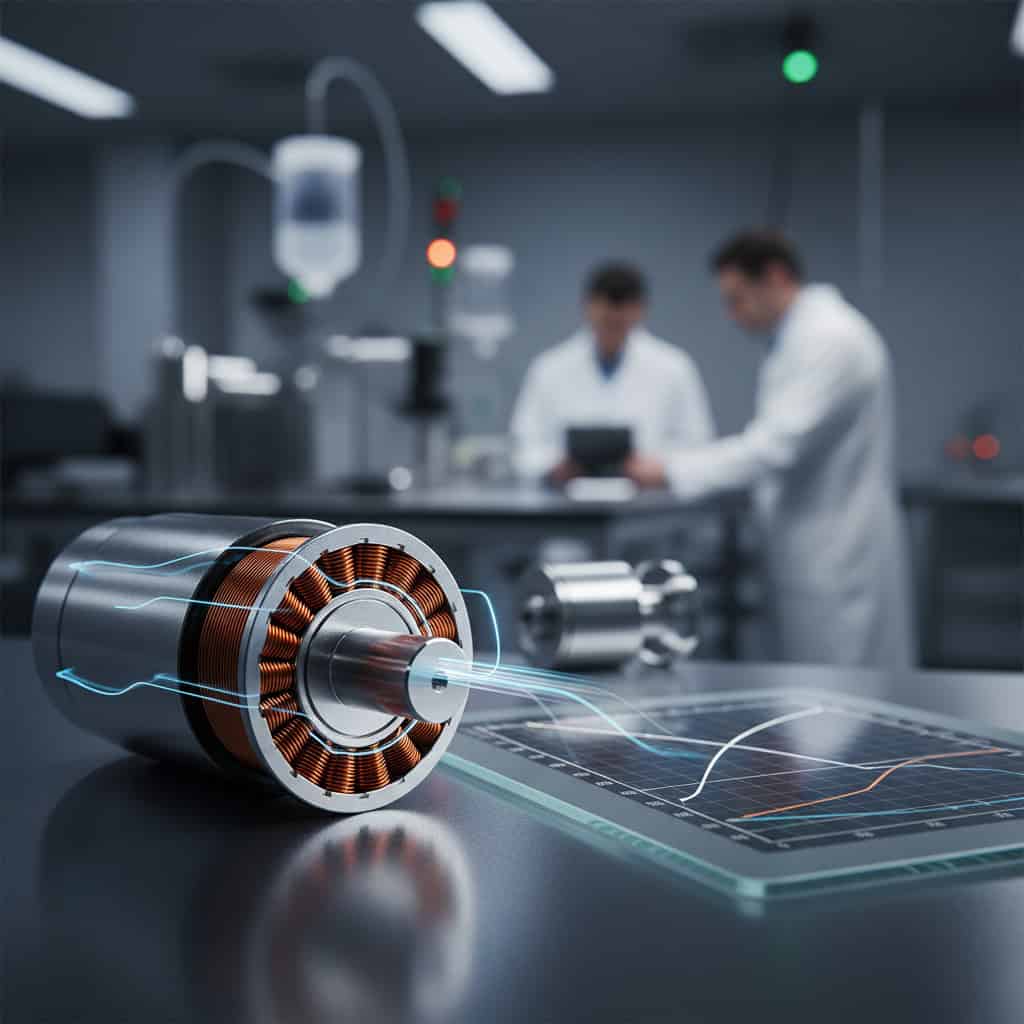
From an engineering perspective, the selection of solenoid valves in medical equipment is far more stringent than in general industrial applications. The core challenge lies in their mandatory compliance with IEC 60601-1 medical electrical equipment safety standards. In medical ventilators, hemodialysis machines, or automated drug dispensing systems, solenoid valves play a critical role in precise flow control and safety locking. The primary consideration during selection is Insulation Classes, which typically need to reach Class H (180°C) or even higher to ensure that the insulation layer inside the coil does not degrade due to accumulated heat during prolonged continuous energization (100% Duty Cycle), leading to leakage currents exceeding medical safety limits. It is worth noting that for the low-noise requirements of medical equipment, the impact force control and electromagnetic compatibility (EMC) of solenoid valves during operation are also key evaluation points. To prevent electromagnetic interference from affecting surrounding precision detection instruments, high-quality medical-grade solenoid valves integrate demagnetization circuits and shielding designs. In practical applications, the control of residual Magnetism is crucial. If the solenoid valve’s plunger cannot be released immediately after power-off due to residual magnetism, it could lead to medical incidents. Therefore, when purchasing, manufacturers must be asked to provide hysteresis curve reports for the materials and confirm whether high-performance powder metallurgy or electrical steel subjected to special annealing treatment has been used to ensure residual magnetism is close to zero, guaranteeing the absolute safety of equipment operation.
Anti-Tamper Opening and Life Cycle Testing Standards in Security Systems
In smart security and high-end access control systems, the reliability of solenoid valves directly impacts life and property safety. Such applications typically focus on international standards like UL 1034 (Standard for Burglary-Resistant Electric Locking Mechanisms) and EN 14846. The key to security solenoid valves lies in matching their Solenoid Force Curves with the actuation force. From an engineering perspective, when a lock is under pressure (e.g., a door leaf subjected to wind pressure or external pushing force), the solenoid valve must have sufficient initial push or pull force to overcome friction. To verify its stability under high-frequency use, life cycle testing must achieve 1 million to 10 million cycles, and throughout this process, the management of the Duty Cycle is crucial for determining the component’s lifespan. Many cheap products, after frequent activation and deactivation, suffer from poor engagement due to wear on the pole faces or accumulation of oil residue. High-quality security solenoid valves undergo special coating treatments on the plunger surface (such as chemical nickel plating or Teflon coating) to reduce friction coefficients and enhance corrosion resistance. The core challenge is how to maintain high holding force under low power consumption, which typically requires precise calculation of coil turns and optimization of magnetic circuit structure, rather than simply increasing input power.
Technical Performance Comparison: Application of Global Engineering Philosophies and Materials Science
Different regional engineering philosophies have a significant impact on solenoid valve design. Japanese precision manufacturing tends towards extreme miniaturization and high-precision stroke control, with their products excelling in the linearity of their Solenoid Force Curves, making them suitable for precision medical instruments. European modular design emphasizes system compatibility and durability, typically featuring higher-grade heat resistance class materials and offering a wide range of accessories for rapid installation in various settings. In contrast, China’s large-scale production model, while offering cost advantages, often carries risks in material consistency and long-term stability (especially residual magnetism control). In actual selection, engineers must compare performance under different environments. The table below presents technical specifications reference for medical and security applications, considering different duty cycle and life expectancy requirements:
| Application Area | Recommended Duty Cycle | Insulation Class | Life Cycle Test Requirements | Remanence Control |
|---|---|---|---|---|
| Medical Automation Analyzer | 10% – 50% Intermittent Operation | Class F (155°C) | 20 million cycles or more | Extremely Low (< 0.5%) |
| Medical ICU Equipment | 100% Long-term Energization | Class H (180°C) | 5 million cycles or more | Extremely Low (< 0.2%) |
| Smart Security Electronic Lock | 1% – 10% Instantaneous Activation | Class B (130°C) | 1 million cycles or more | Low (< 1%) |
| Industrial Explosion-Proof Safety Valve | 100% Long-term Engagement | Class R (220°C) | 3 million cycles or more | Low (< 1.5%) |
It is worth noting that environmental factors such as humidity and temperature cycles can also alter the magnetic permeability of materials, thereby affecting the mechanical output of solenoid valves. Therefore, when conducting life cycle tests, it is crucial to simulate extreme conditions of the actual application environment, rather than merely performing purely mechanical reciprocal tests in a constant-temperature laboratory.
Pro-Tip: In the maintenance plans for medical and security equipment, it is recommended to monitor the DC resistance value of the electromagnet’s coil quarterly. Significant deviation in resistance often indicates a localized short circuit or overheating aging within the coil, which is a key data indicator for preventive replacement before failure occurs.
Precision Customization and High-Reliability Supplier: Shih Shin Technology’s Technical Advantage
Facing the nearly stringent “zero-failure” requirements from the medical and security industries, standard products often struggle to fully meet the specific spatial constraints and mechanical requirements of certain components. Shih Shin Technology built on unit-by-unit full inspection — coil resistance, pull force, withstand voltage and temperature rise measured on every piece — specializes in highly complex customized development. Starting from the engineering side, Shih Shin Technology not only provides products that comply with international safety certifications, but also possesses a profound foundation in materials science, capable of providing professional simulation analysis for residual magnetic control and stroke curve optimization. In the early stages of medical equipment development, Shih Shin’s technical team can intervene, assisting engineers with collaborative design for power-on rate and heat dissipation structures, ensuring that electromagnets maintain stable output performance even under extreme conditions. Whether for automated diagnostic equipment requiring an extremely high cycle life, or security locks demanding extremely high instantaneous impact resistance, Shih Shin Technology, with its strict quality control processes and advanced testing equipment, provides global customers with a one-stop solution from design and simulation to mass production, making it a capable partner for complex electromagnet OEM/ODM development.


